
QR Codes, NFC, and Mixed Reality: Making Your Printed Material Talk to the Digital World
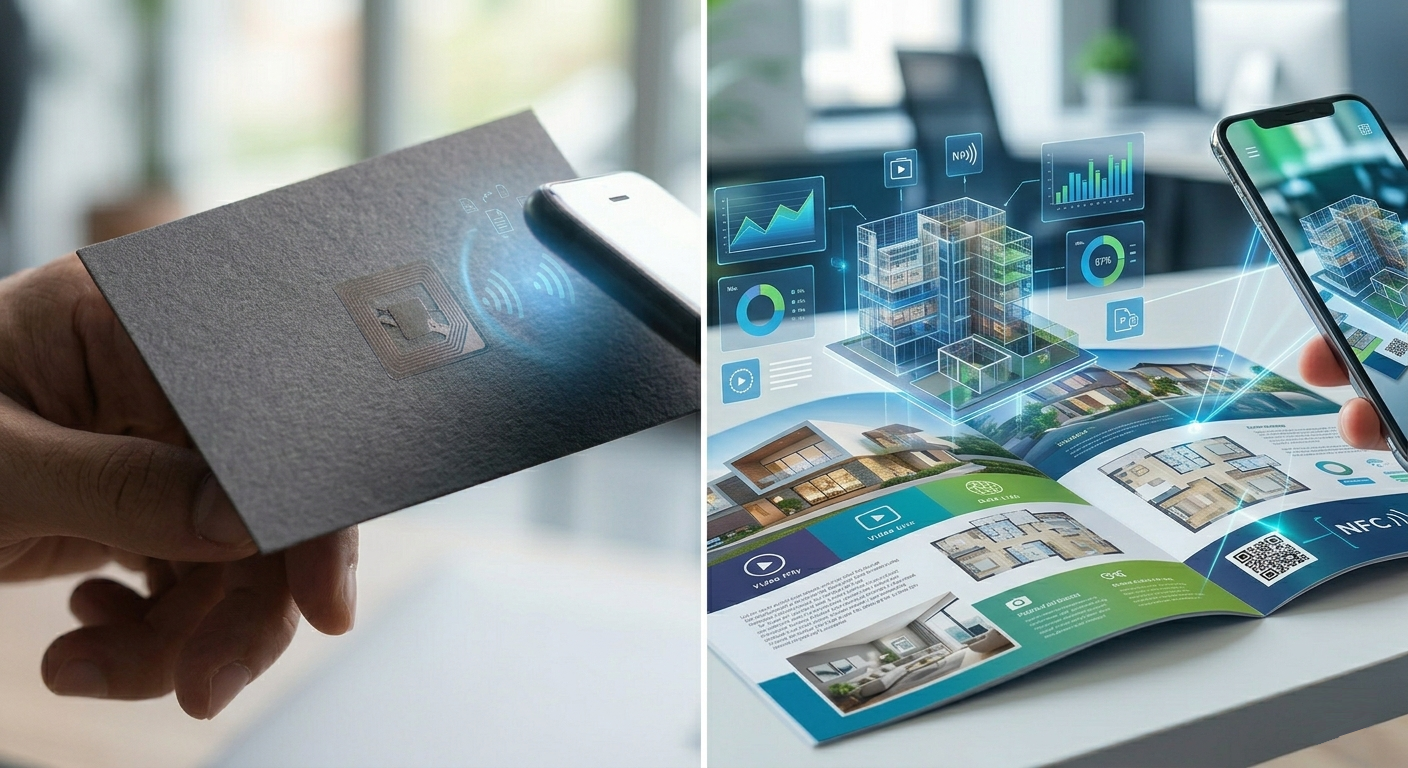
In a world where digital transformation seems to have absorbed everything, printed paper has shown surprising resilience. However, its role has shifted: it is no longer just a static carrier of information, but a physical interface device. For modern companies, true innovation does not lie in choosing between paper or digital, but in mastering omnichannel strategies. Below, we analyze the three technologies turning printed material into intelligent, connected tools. 1. The QR Code Renaissance: From Convenience to Conversion After years of limited use, the QR code has established itself as the gold standard for quick connectivity. But for a business, its value goes far beyond saving a user from typing a URL. 2. NFC Technology: The Sophistication of “Contactless” NFC (Near Field Communication) is the technology behind mobile payments, and its application in printed paper is synonymous with exclusivity and efficiency. Unlike QR codes, NFC does not require direct line-of-sight; it works by proximity. 3. Mixed and Augmented Reality: Paper as an Interactive Canvas Mixed Reality (MR) is perhaps the most spectacular frontier. Here, the printed material acts as a “marker” that software recognizes to overlay digital layers of information in real-time. Conclusion: The Future is “Phygital” The integration of QR, NFC, and Mixed Reality into printed material is not just an aesthetic trend; it is a data capture strategy. For the first time in history, companies can measure the Return on Investment (ROI) of a printed campaign with the same precision as a Google Ads campaign. At Total Prints Solutions, we understand that smart paper is the bridge that unites the tangibility of your brand with the analytical power of the digital world. It is time to stop printing static documents and start printing interconnected experiences.